
From November to March, Cyprus is one of the warmest places in the EU, with mild days, plenty of sunshine and far fewer crowds than in summer. It isn’t beach weather every day, though. This guide uses official climate figures to show what Cyprus winter sun really looks like month by month, what stays open, and which towns make the best base.
Quick answer
- Warmest winter months: November (average high 22.4°C) and March (18.7°C).
- Coolest and wettest: January and February, with highs around 16–17°C and about 10–11 rainy days a month.
- Best bases: Paphos for sights and walks, Limassol for year-round city life, and Larnaca for the most flights.
- Quietest: Ayia Napa and Protaras, where many resort hotels and beach bars close for part of the winter.
- Swimming: the sea is about 18°C in November, but it drops to around 15°C from January to March.
Cyprus winter sun weather by month
The figures below are long-term averages for the coast at Limassol, supplied by the Cyprus Meteorological Service and published by the Deputy Ministry of Tourism. Sea temperatures come from the Department of Fisheries and Marine Research. Paphos and Larnaca are broadly similar, while inland Nicosia has colder nights.
| Month | Average high | Average low | Rainy days | Sunshine per day | Sea temperature |
|---|---|---|---|---|---|
| November | 22.4°C (72°F) | 13.1°C (56°F) | 6.6 | 7.2 hours | 18.5°C |
| December | 18.3°C (65°F) | 9.9°C (50°F) | 10.7 | 5.7 hours | 17.8°C |
| January | 16.6°C (62°F) | 8.4°C (47°F) | 11.4 | 6.0 hours | 15.1°C |
| February | 16.7°C (62°F) | 8.2°C (47°F) | 9.7 | 6.8 hours | 15.4°C |
| March | 18.7°C (66°F) | 10.0°C (50°F) | 7.3 | 8.0 hours | 15.4°C |
In short, Cyprus winter sun means days on the coast that feel like a good late-spring day in the UK, but the evenings are cool. Also, rain tends to come in short spells rather than long gray weeks. Even so, pack a light waterproof. Up in the Troodos Mountains it’s a different story: at Agros, the January average high is only 10.4°C, and the low is 3.1°C.
November: the best month for Cyprus winter sun
November still feels like autumn on the coast, with highs above 20°C and over seven hours of sunshine a day. As a result, for many visitors it’s the last month for comfortable sea swimming. Most hotels and restaurants are still open in the main towns, although some resort businesses start to close for the season.
December: festive lights and quiet beaches
December brings cooler days and the start of the rainy season, but there are still plenty of bright, mild afternoons. At the same time, towns decorate their squares and seafronts for Christmas. Note, however, that sunset comes before 5 pm, so plan sightseeing for the morning and early afternoon. Finally, museums and archaeological sites close on Christmas Day and New Year’s Day.
January: mild days, cool nights
January is the coolest month, and it’s also the wettest. Still, a typical day reaches 16–17°C on the coast, which is ideal for walking and sightseeing. On January 6, Epiphany is a public holiday, and seaside towns hold the traditional blessing of the waters. Meanwhile, the Troodos Mountains often have snow, and the ski slopes on Mount Olympus open when conditions allow.
February: almond blossom and carnival season
February is similar to January, but with a little more sunshine. Meanwhile, wildflowers start to appear in the countryside, so it’s a good month for hiking. The Limassol Carnival, the island’s biggest, depends on the Orthodox Easter calendar. In 2027, Green Monday falls on March 15, so the main carnival parades take place in early to mid March.
March: spring arrives
By March, days are longer and highs approach 19°C, so it’s a lovely time for coastal walks and outdoor sights. Green Monday is a public holiday with picnics and kite flying, and March 25, Greek Independence Day, is another. By contrast, Easter itself moves between late March and early May, and it’s the biggest festival of the year.
What’s open in winter
Larnaca, Limassol, Paphos and Nicosia are working cities, so shops, restaurants, museums and sights stay open all year. However, some things do change:
- Resort areas: Ayia Napa and Protaras are much quieter, and a good share of hotels, beach bars and water-sports businesses close for part of the winter.
- Opening hours: archaeological sites and museums usually keep shorter winter hours, so check before you go.
- Boat trips: fewer cruises and excursions run, and rough seas can cancel them.
- Hotel pools: outdoor pools are often unheated, so if swimming matters, look for a hotel with an indoor or heated pool.
Best bases for Cyprus winter sun
For Cyprus winter sun, choose a town that’s lively all year rather than a summer resort, because you’ll want open restaurants in the evening.
Paphos is the classic choice. It has a UNESCO-listed archaeological park, a harbor full of restaurants and easy coastal walks. Besides, Kato Paphos stays busy in winter, partly thanks to long-stay visitors. You can compare hotels in Kato Paphos (affiliate link), or read our guide to the best areas in Paphos.
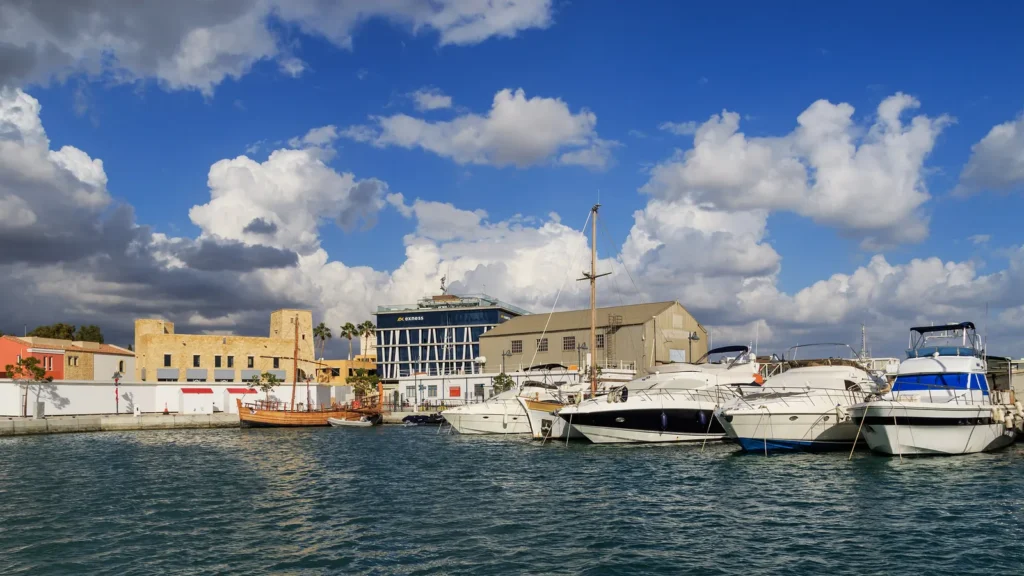
Limassol feels the most like a real city in winter, with a busy marina, a long seafront promenade and plenty of restaurants. It’s also central for day trips to Paphos, Troodos and the wine villages. So if that sounds right, check hotels in Limassol (affiliate link), or see our Limassol area guide.
Larnaca is closest to the main airport, which usually has the most winter flights. Its palm-lined Finikoudes seafront is pleasant for walks; in addition, the town is small and easy to explore. Similarly, you can browse hotels on the Larnaca seafront (affiliate link), or read our Larnaca guide.
The Troodos Mountains make a fun add-on for a night or two, especially if you’d like to see snow. Platres is the main village base; moreover, it has traditional hotels with fireplaces. In that case, look at places to stay in Platres (affiliate link).
Found your base? Compare winter prices for hotels, apartments and villas across Cyprus.
Affiliate link: our accommodation links go through Stay22, which sends you to a booking site such as Booking.com, Expedia or Vrbo. If you book, we may earn a commission at no extra cost to you. See our affiliate disclosure.
Getting there in winter
For Cyprus winter sun trips, Larnaca generally has more year-round routes from the UK than Paphos, although both airports have winter flights. On average, the flight from London takes about 4 hours 30 minutes to 5 hours. Cyprus is two hours ahead of the UK in winter. Our table of every direct UK–Cyprus winter flight shows which airports and airlines fly in each month. For more detail, see our guides to flights to Larnaca and flights to Paphos, as well as our Larnaca and Paphos transfer guides.
Search winter flights to Cyprus
Each button opens our flight search with the route pre-filled for one adult. Pick your dates, then compare airlines and booking sites. The London option covers all London airports.
- ✈ Check flights: London → Larnaca
- ✈ Check flights: Manchester → Larnaca
- ✈ Check flights: London → Paphos
- ✈ Check flights: Manchester → Paphos
These are affiliate links: if you book through them we may earn a commission, at no extra cost to you. Prices are shown by the booking site in the currency you select. See our affiliate disclosure.
Packing for a Cyprus winter break
- Layers: T-shirts for sunny afternoons, plus a warm sweater or fleece for the evenings.
- A light rain jacket: showers are short but can be heavy, especially from December to February.
- Walking shoes: winter is the best season for hiking trails and archaeological sites.
- Swimwear anyway: some days are warm enough for a quick dip, and many hotels have indoor pools.
- Warm clothes for Troodos: mountain roads can be icy, so check conditions before you drive up.
Related guides
- Larnaca or Paphos: which airport should you fly into?
- Where to stay in Paphos
- Where to stay in Limassol
- Car hire in Cyprus for UK drivers
Plan your trip to Cyprus
- Flights: search flights to Larnaca and Paphos from the UK and Europe, or read our guide to choosing between the two airports.
- Hotels and apartments: compare places to stay across Cyprus (affiliate link), or start with our where-to-stay guides.
- Airport transfers: pre-book a private transfer with GetTransfer (affiliate link), or see our Larnaca and Paphos airport guides for buses and shuttles.
- Car hire: compare car hire from local Cyprus firms (Localrent) (affiliate link), and read our guide to renting a car in Cyprus before you book, including insurance excess and driving rules.
- Mobile data: check your roaming charges, or get a Cyprus eSIM from Airalo (affiliate link).
- Travel insurance: buy cover before you travel and check that it includes the activities you plan, such as water sports or driving.
Some links in this box are affiliate links: if you book through them we may earn a commission, at no extra cost to you. See our affiliate disclosure.
How we research: this guide is based on official sources and published airline and transport schedules, not on a sponsored visit. Information was checked on October 8, 2026. Schedules, routes and prices change, so confirm with the airline, operator or venue before you travel.
Sources
- Deputy Ministry of Tourism (Visit Cyprus), Air and sea temperatures, sunshine and rain days (figures supplied by the Cyprus Meteorological Service and the Department of Fisheries and Marine Research): visitcyprus.com
- Cyprus Department of Meteorology: moa.gov.cy/moa/dm
- Deputy Ministry of Tourism, Traveller’s Handbook (museum and site closures on public holidays): visitcyprus.com
- GOV.UK, Cyprus travel advice: gov.uk/foreign-travel-advice/cyprus
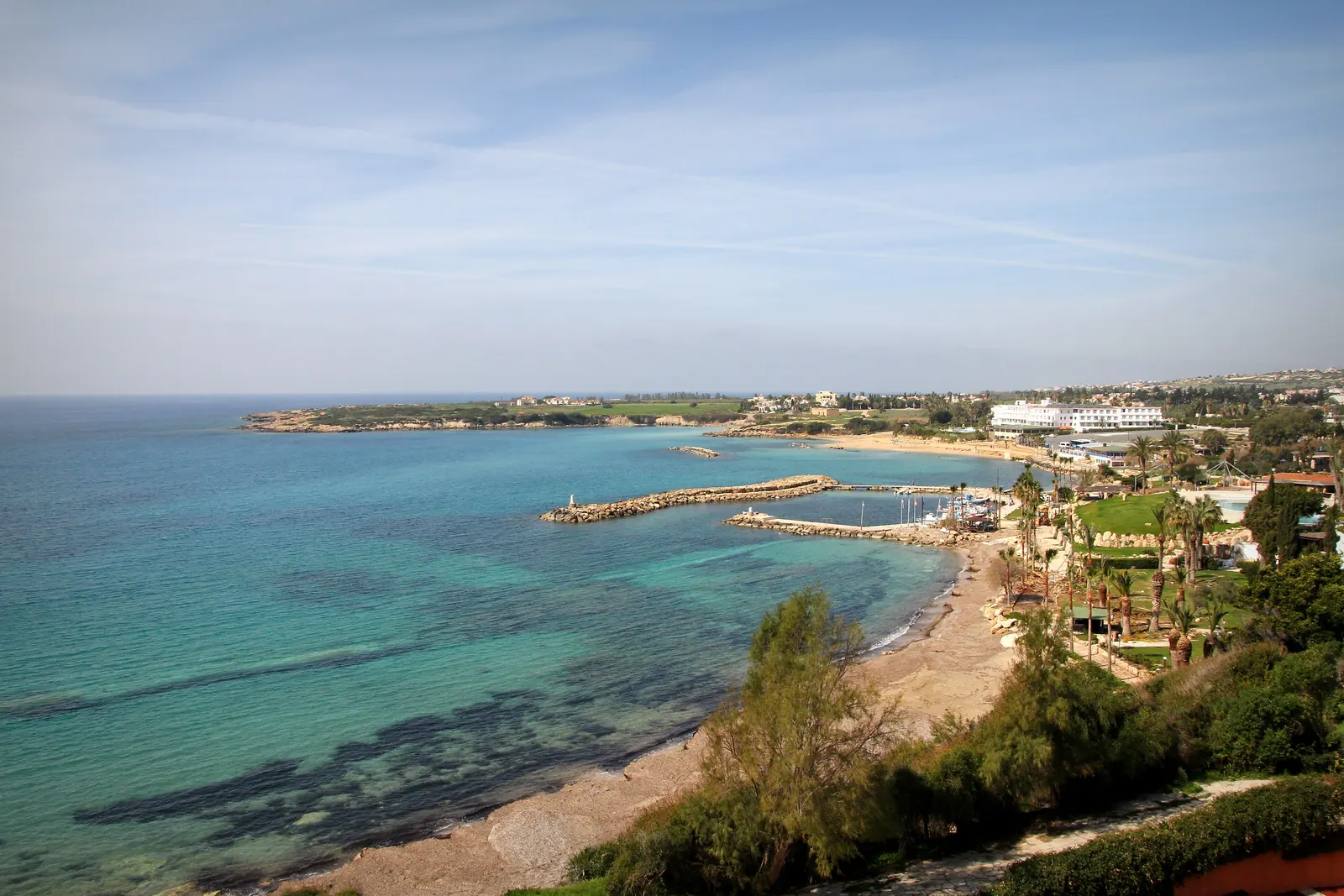
Featured image: Coral Bay near Paphos on a sunny day in late February. Photo: Wojciech Biegun, February 27, 2013, via Wikimedia Commons (file “Coral Bay near Paphos (winter) – panoramio (1).jpg”), CC BY-SA 3.0 (creativecommons.org/licenses/by-sa/3.0). Resized and compressed.

We research Cyprus and Greece trips for travelers from the UK and Europe, using official tourism, airport and transport sources and published airline schedules. No sponsored rankings. How we research · How we earn